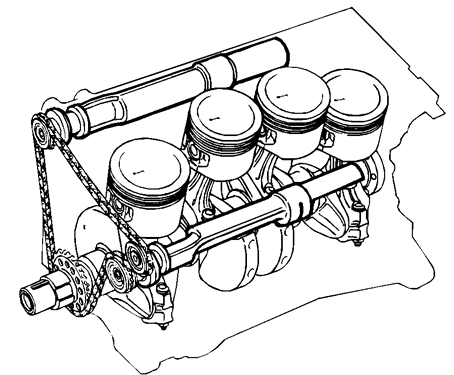
위 그림은 구글님께서 선사하신 '사브'의 밸런스샤프트 그림입니다.
피스톤 양쪽으로 요상한 모양의 작대기 두 개가 밸런스샤프트.
현대의 쎄타2 엔진이 꾸역꾸역 마력을 올려가다가...
어느순간 밸런스샤프트 모듈을 제거하고 순식간에 20마력정도 출력이 올라갔습니다.
보배 특성상 원가절감하느라 그런거 아니냐고 하지만...
좀 더 알아보니 재미있네요~
우선 위키피디아의 내용을 링크해봅니다.
http://en.wikipedia.org/wiki/Balance_shaft
적절히 요약을 해보면...
특히 직렬4기통 엔진에서, 왕복운동을 하는 부품들과 크랭크샤프트가 빠른 속도로 회전하다보면...
무게를 잘 맞춘다고 해도 구조적으로 어쩔수없이 진동이 생긴다고 합니다. (엔진 회전수의 2배에 해당하는 진동)
그래서 크랭크샤프트와 반대방향으로 회전하는 '이상한 모양으로 생긴' 밸런스샤프트를 하나 또는 두 개 돌려주는 것이죠.
진동을 많이 줄여준다고 하네요.
There is some debate as to how much power the twin balance shafts cost the engine. The basic figure given is usually around 15 hp (11 kW), but this may be excessive for pure friction losses. It is possible that this is a miscalculation derived from the common use of an inertial dynamometer, which calculates power from angular acceleration rather than actual measurement of steady state torque. The 15 hp (11 kW), then, includes both the actual frictional loss as well as the increase in angular inertia of the rapidly rotating shafts, which would not be a factor at steady speed. Nevertheless, some owners modify their engines by removing the balance shafts, both to reclaim some of this power and to reduce complexity and potential areas of breakage for high performance and racing use, as it is commonly (but falsely) believed that the smoothness provided by the balance shafts can be attained after their removal by careful balancing of the reciprocating components of the engine.
위 링크에서 일부분 발췌했는데요.
대략적으로 트윈 밸런스샤프트가 15마력 정도를 잡아먹는다고 합니다.
순수한 마찰력에 의한 손실에, 회전수가 변하면서 관성모멘트(회전관성)의 변화에 따른 출력손실이 더해진 값이라네요.
사실 엔진이 구동되는 것 자체에는 밸런스샤프트가 꼭 필요한 부품이 아니라서...
출력상승과 구조적 복잡성 때문에, 레이싱용 엔진에는 일부러 빼버리는 경우가 많다고 합니다.
즉, 진동을 잡느냐 vs. 출력과 연비를 잡느냐...의 문제인거겠죠^^;;
근데 과연 밸런스샤프트가 있는지 없는지를...
운전해보고 알 수 있을지는...잘 모르겠네요. ㅎㅎ